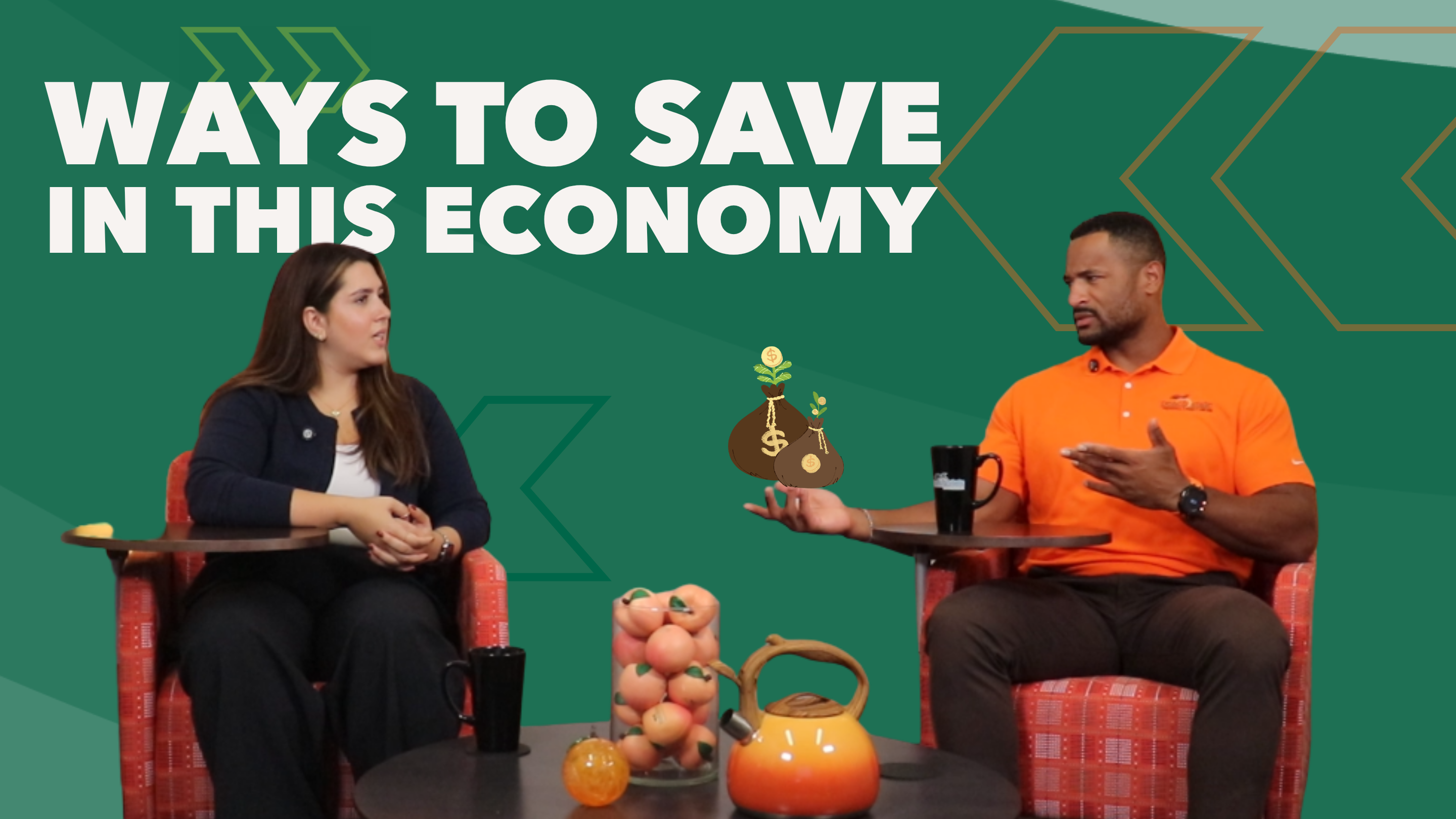
In this episode we're sitting down with Sarinya Ball, our Marketing Manager, to talk about our financial journey's, how we came to Peach State, and what we've learned along the way.
Video Transcription Below:
00:08
Hello, and welcome back to another episode of Spilling the Peach Tea. My name is Elia.
My name is Gabe, and we have a super awesome guest today, Sarinya from the marketing department.
On today's episode, we're going to be talking about our financial journey, how we came to Peach State, and what we've learned along the way.
So, Sarinya. How are you?
I'm doing well.
Welcome.
Thank you.
So, ah tell me a little bit about what you do here at Peach State.
Sure. I'm the Marketing Manager for the marketing department and basically, I am the word wizard as I would call it. Pretty much I do all of the copywriting for the website to social to, and everything in between.
I actually work pretty close with, with you Gabe, you take my words and turn it into life with your visuals.
Turn it into magic.
Magic.
00:59
So before we get into the more serious questions, what is a fun fact, or shall I say tea, that you want to share with us and share with the audience?
Yeah. Well, I guess you could tell a little bit about my unique name. I'm not sure if a lot of people have met other Sarinya’s , but I am half Thai. My mom is from Thailand, and my parents met overseas. My father was in the military, so I'm pretty proud to be of Thai heritage.
Sweet.
Very nice.
So first question is, what was your first experience with money and how did it shape your financial journey?
My first experience with money. Okay this is going to bring me back to my high school years. I think I was a junior or senior in high school. And there was a job shadow program that was open to juniors. And one of the programs was to shadow a local credit union.
And none of the juniors wanted to attend. So they opened it up to seniors. And I saw it as an opportunity to get out of class for a day and get free lunch. So I mean as a senior, you're checked out anyways. So I took part in that. And I got to walk around the credit union and learn different facets about the different departments and kind of how they operate.
And there happened to be a part-time teller position that was open, and the role was offered to me. And I started many, many years ago, and I've been here ever since.
Sweet.
Very nice.
02:29
What about you Gabe? Do you remember your first experience?
Hmm, I mean that was a long time with that. I'm getting a little old these days. Umm, my first financial experience, uhhh, I don't know. I'm trying to think, even when I opened my first bank account, I mean, that might have been, shoot, maybe when I was like 10 or 11, I want to say.
Umm, and you know all I had to put in there was just some change or something that was just,
5 bucks.
Shoot, I don't even know if it was $5, to be honest with you.
Nowadays it's closer to like,
Everybody has a little piggy bank. And of course, I probably dived into my piggy bank more than I should have. But uhh, yeah, I think just a regular bank account for a kid back when I was maybe, you know, in that preteen time. What about you?
I, my first, first experience with money that I remember was like elementary school when my mom would give me like ice cream money in like a little Ziploc baggie. And I'd be like, how much is this one? And I would like, that's my first, first memory that I remember of just like having So, money, even though it wasn't my money.
Umm, but then I do remember my first time opening an account. I think I was like right into high school. Umm, I went with my dad, ummm and opened it at a bank, not a credit union. Didn't know much about credit unions. And I still have that account to this day. I mean, that wasn't that long time ago, but.
That's pretty cool.
Yeah.
04:12
A little fun fact. I actually have never banked with a bank? I've only known a credit union stuff. When I was younger, too, my father opened an account for me at a credit union and I’ve just been with credit unions ever since.
You’re like a day oner.
I’m a day oner. I’m an OG!
OG!
Yeah can’t say that. Can’t say that.
Um so what brought you to Peach State and why? Out of, like you said, you've always been with credit unions, all your accounts have been with credit unions. What draw you to Peach State or drew you to Peach State specifically?
Yeah, so I was working for a different credit union up north several years ago, and I took part of a marketing and business development class. It was a four-year program. So we met every year for a week and we kind of studied about credit union marketing and business development. And that's where I met our awesome boss, KP.
We were paired up and part of a group. And we've always kept in touch throughout the years. Always had a great friendship and networking, bouncing ideas off of each other. I was up north, she was down south. So completely different markets. So it was great to keep in touch and network.
And then I relocated to North Carolina. I was still working for the credit union up north remotely and Kristen had reached out to a little group of us umm, because she had an opening for a Marketing Manager so she was looking to fill the role. And I jokingly reached out and said if you make the position remote I would consider, and she's like actually let me see what I can do if it's something that's possible because the position was to be here in Georgia. And she asked, and the rest is history.
Nice, pulling the right strings, I guess you could say. Very nice.
So as you guys could tell, Sarinya is fully remote on our team, so we only get to see her about once a quarter, usually. So we soak up that time and have as much fun as we possibly can.
Physically, I'm here once a quarter, but we see each other every week.
Over Zoom. We see each other on Zoom every week, but physically we see her once a quarter.
06:24
Umm, do you want to jump into the next question?
Well, I was going to say before you, you did that, ummm we're going to talk about your uhhh
What brought me to Peach State?
Peach State Experience.
I was getting a little ahead of myself. I am a little different than these guys. I was actually an intern. I started off as an intern. And I was at Georgia Gwinnett College, and, which is one of our SEG’s. And, we do a lot of sponsorships and stuff like that with them. So, we, you know, an internship came about and I applied and had my interview with Kristen. It was supposed to be in person, but she got COVID, so it got moved to a virtual one. I still remember it was in my room, I had like a little tiny corner, I just like, like a white wall background and just did it there.
But what drew me was just her, her presence, the way she like, you know, talked and presented herself and I loved the idea of working for her, umm after that interview. And that was like the main reason I wanted to come work here and, you know, learn from her. Obviously, she's a woman and like she's the boss and I wanted to learn as much as I possibly could from her and hopefully take that into what I become. So yeah, that was what truly pushed me to join. And then they liked me enough to keep me on. So now I'm the Marketing Coordinator and I get to work with these awesome people.
Very nice. Very nice.
08:00
What about you?
Umm, I have a different experience as well. Umm, so I came from a different industry, pretty much, building materials and of just a little backstory. So, I'm the Graphic Design Manager and I guess that's the nice thing about being a graphic designer because you can kind of take your talents to different industries without really knowing what the industry does. Umm, it helps to have some background, but you know, the, I guess day-to-day things don't really change much as far as like using your talents.
But so when I was looking for a new job at the time, I really had no idea about credit unions, like basically like the workings from the background per se. But when I came here, it just felt like a family and I knew that it was kind of like, you know, where I wanted to be a little less corporate, more of a home per se. So, you know, when I got here, the interview was good and people I met were fine and everything just kind of went better than expected. So I was like, oh, let's, let's do this. So..
And you're part of a team full of women, so that's pretty cool.
Oh yes, that's.
That's an interesting.
We don't drive them crazy at all.
Makes it so much better. So much better. I just, there's no words even explain how great that part is.
09:37
You know, you talked, um-- you came from the--corporate world. There was a little point in time I did have a little outside experience of the credit union industry. I worked for a title loan company. And if you're not familiar with a title loan company, it's a very predatory business. Their lending standards and ethics can be a little questionable at times.
And as an underwriter there, my role was to basically write loans for people's vehicle and umm, people would come in and they'd need a little bit of help and they would sign over their title for a few hundred dollars. So their vehicle that's probably worth thousands, they would give it up for a few hundred dollars. And I'm writing these loans knowing that I am going to repo their vehicle in less than a month. And the interest rate that we're charging them was ridiculous. I knew these people could not make their payments.
And it was probably like the second week in. I'm like, what am I doing? This does not feel good. I can't lay my head down at night and like show up every day at work as my best self, knowing that I'm not helping people. And I remember one day I was helping a customer, and my boss was like two cubicles down,and I'm whispering because I didn't want him to hear me. And I'm like, you need to go to a credit union. Don't come here. Go to a credit union will actually help you.
Needless to say, I lasted probably a month at that place and realized, you know, working for a credit union is more than just coming in and punching clock every day. The things that we do every single day is to help people from one aspect to the other, whether it's somebody that maybe needs to rebuild or restart in life.
The philosophy of a credit union is people helping people.
And not only does that extend to our members, but I feel that in our culture, we talked about the family vibe here that you probably don't get at a corporate place, like at a corporate institution, it's very like, it must feel like robotic and like nobody really cares about you as a human. It's just, you're just a number. And that's what I really love about the credit union is that people helping people bleeds throughout the organization and beyond. It's a really good feeling to be a part of something bigger than ourselves, you know.
Yeah, it's definitely, I mean, being in the marketing department, we're not super member facing, but all the branch staff, tellers, branch managers, BD reps that go out in the community, you know we see, we see the difference. We hear the difference through the stories contest, the member stories contest that we get, the reviews, everything. So, you can truly see the difference you're making in other people's lives, whether you're getting them out of a hard situation or, you know, helping them, you know, get a house or a car or, you know, fixing their credit.
Credit unions are definitely better at that and focus on you as a person and not just like you said, a number like banks and stuff like that, so.
And I mean, even our C.A.R.E.S. program, I mean, a lot of people don't even realize that, you know, beyond the financial portion of just banking in general, you know our CARES program is touching the lives of students and allowing people to umm, you know, extend their education in ways that they might not be able to if they didn't have our program working for them in the background.
13:05
The Peach State FCU C.A.R.E.S. Foundation was established in 2021 with the goal of helping our neighbors with contributions throughout our service area. One of the many ways the Foundation gives back is through its annual Scholarship Program, which reflects the credit union’s ongoing commitment to empowering members through education and financial opportunity. Scholarships are awarded to high school seniors and professionals seeking career advancement. This year, the Peach State FCU C.A.R.E.S. Foundation awarded $272,500 in scholarships and educational grants across Georgia and South Carolina. Congratulations to this year’s recipients!
13:47
So, guys, you know that I have a little bit of history in the credit union world. Been here for a hot minute. What did you guys know about credit unions before you got here? Did you know anything?
You go first?
I'll go first.
Hit it.
I had no idea what a credit union was before I started here. Umm, I don't even think we have credit unions in Lebanon, so I had never really known the difference. So, when I started working here, we go through the training, and in the training they also do like a presentation of the main differences between credit unions and banks. And I was just, it was very interesting because again, like no prior knowledge, didn't know anything about credit unions. And I just would see them around and I would be like, oh, it's just another bank, fancier name, but just another bank.
And it was when I started at Peach State and then, you know, learning from everybody and meeting people and talking to people that I truly, truly understood the difference, even like talking or seeing the member stories contest and seeing how we truly influence and change people's lives that I, you know, understood the main difference.
And then I also got to go to the governmental affairs conference last year as a crasher, which was very cool. I think they pick like one person from every state every year, so I got to go. And it was, and then even there I got to meet, you know, young professionals in the credit union world from all over the United States that, I learned so much from and just the differences they're making and learned from them and all of the, you know, in those courses we also learn more in depth about, like the first credit union ever and how credit unions started, and the true history of it, and it just changed, like that conference changed my perspective a lot on working for a credit union and it just made me love working here even more. So, yeah.
Very nice. Very nice.
What about you, Gabe?
Mine, you know, mine's not as special as that. But, umm, you know, I as a kid, you know, I do remember seeing banks and credit unions, not really knowing the difference per se. But, you know, my family was primarily at a bank. And so, you know, I would see the credit union, but we would mosey on down to the bank. Umm, but, it wasn't really until probably around my college years, one of my ex-girlfriends worked for a credit union in Tennessee and she asked me to join because she was trying to reach a quota so that she could get a little promotion at her credit union at the time.
So that was my first time joining a credit union and really kind of getting a little more in-depth information on like, I guess the kind of like the background of a credit union. I didn't know a lot, but just from some of the stuff that she had told me, I also got my first auto loan from them. So that was one of the main things that I knew about a credit union. It's like, hey, you want to get an auto loan? Like that's the best place to go. You're going to get probably the lowest rates. And at the time I think it was like 2%. So I was like..
I don't think you see that nowadays.
Yeah. I was like, uhh, sign me up. Yeah, that was my nice little Honda Civic. Miss that, miss that guy. That was a beautiful car.
Umm, but uhh no, it wasn't really until I started working here that, you know, all this flood of information umm came. And like Elia said, you know, when we start here, we get a training and they really break down the difference between banks and credit unions. And so that opened my eyes to not only what Peach State does, but some of the other credit unions in the area because you know, when you start working at one credit union, you kind of realize like, oh, so this is an education-based credit union. Some are company based; some are college based. You know, it just depends on the area. Umm. There's credit unions for different , you know, people around the nation. So that was the cool part, is just kind of diving in and doing some of that further research on some of the other, umm, credit unions in the area. So, there's some big ones, there's some small ones. We're kind of like tucked right there in the middle.
Right the middle. It's that sweet spot.
18:36
You know what's cool? We all talked about like our journeys, whether it was from our first experience with a credit union or actually working for a credit union, and I noticed something, umm, from our stories that we shared is that there was kind of this accidental blessing that we came across.
Like, we never sought out to seek a credit union, but whatever brought us to it was like-- I don't know. I don't know like the words for it. It was like an accidental - this unkept secret – this top secret.
Some will say it’s fate.
It's fate, yeah. You know, it's like trying to find your true love, like,
you know I think that's common, too, with a lot of—you know for the consumer and for staff too, it's like until you realize what you're getting into and then you're in it, and it’s like - it makes me think about the difference.
OK, I know I'm rambling. I'm going all over the place here. But we talked about the difference between a bank and a credit union. And you can look like, at the list. You can say the name. And then one has shareholders, one doesn't. One's for-profit, one's not, right. That's the black and white facts.
But for me, I think the main difference is what you feel. Like, when you walk into a credit union, The way that you're treated. When you come to work every day and you show up and you're with your team or you're interacting with coworkers, the feeling is different, I'm going to assume, than if you walk into a bank. Like, I take it as going to Chick-fil-A or going to McDonald's…
Oh, wow.
Right? The experience, you know, like it feels different when you're ordering something and somebody's like my pleasure versus somebody being like, just pull around.
Hey, you'll pay $8 for that sandwich over a little dollar menu item just because of that alone.
We’re not talking about the money part.
Well, I'm saying.
I mean, even like being at the GAC, I didn't know that, like there's, like we collaborate. Like credit unions collaborate.
We're not just I feel like banks are very..
Sharks.
Me, me, me, you know what I mean? Like they stay to themselves. They don't share information. They're just very separate.
Well, you're dealing with profits at that point.
Yes. So, whereas with credit unions, we have leagues that, you know, what's the word I'm looking for?
Kind of like our mentors.
Yes.
Yeah, they govern us in a way. Umm, but we collaborate like there's a platform where you can go and talk to people from different credit unions and get information, get ideas, and just it's one big, happy family.
Well, I think that goes back to the philosophy of why credit unions came about. It's all about people helping people. However, you want to define that, however you want to bring that to life at the end of the day, it's going to be people helping people financially, whatever.
Yeah. And you gotta realize too, like, I mean, I think we see that a lot because you have individuals who are either on like the bad end of their credit or they're in a spot where they're trying to rebuild and, you know, a lot of the banks are not going to give them chances, whereas, you know, they can come to us and possibly, you know, get a chance if they wouldn't get there. Umm, whether that be, you know, with a first time mortgage or their car or, umm, you know, other options that we, we provide, umm, you know, a lot of these people would be turned away immediately just off, their credit alone. So, umm, that's the nice thing about a credit union because, you know, we actually give them a chance and, you know, kind of consider some other factors.
Let's not be fooled, too, with these other institutions that are out there, these like neobanks and fintechs that are out there that promise these experiences of, you know, you can just sign up online and, you know, I've seen a lot of ones that are like, their mission and their values sound very similar to what credit unions do. And I'm like, you guys are, you're stealing from us.
22:40
But you know what, we still have people we still have people.
I was just going to say that.
We still have people at our branches.
Yes.
And a lot of, a lot of institutions, banks, if you will, a lot of these folks are trying to scale down.
Yeah.
So their branches are, you may have one person in that branch, and then you got digital tellers. Then those, you know, I don't know, maybe I'm old, maybe I'm Unc. I don't know. But, you know, I still, you know, when I have a problem, I do want to talk to someone. You know what I mean? And I'm kind of in between there where, you know, a lot of times, I don't want to talk to people. But, but I'm telling you, when it comes to your money...
With serious matters. You don't want to talk to AI or some robot that's like, hello.
So, you know, we're always going to have some people in the branch to help you out.
I mean, I went to, the bank that I bank with and at one of their locations, yeah, they have nobody. I think they have one person just to oversee the tech, but they didn't have somebody that I could talk to. Like even the person that was there didn't, like kind of didn't even want to talk to me. Like they didn't even want to help me out. They kind of usher you to the digital pods or whatever they call them, and yeah I mean I'm young and I don't, I like the tech but with certain stuff I want to sit down with like a financial advisor, I want to sit down with like or stand with a teller or whatever but like I want a physical person in front of me helping me out rather than, here you go figure it out yourself.
Going back to how it makes you feel, you know, want to walk in and tell somebody like hey this just happened like hey Tony, how's it going. I want to talk to the tellers and have that relationship with them.
You want Tony be real, right?
I want Tony to be real.
That's right!
Yeah!
That's right!
Not Tony the Tiger.
Right.
24:48
So, umm, tell me, what has working with a credit union or Peach State, uhh, taught you about money or finances?
Yeah, so, umm, I've been in the industry since I was 16, so I've gotten to grow up, umm, with a credit union and I've, I’ve learned A lot. Some things I've learned the hard way, umm, like any person new with money. Umm.
I will say though, working at Peach State, what I've learned, umm, has been like the educational piece the importance of learning about how to manage money, how to spend responsibly, as opposed to just going out there and applying for a loan, getting a loan, and not knowing how it works, what APR is, what you know, how interest rate impacts your monthly payments.
Umm, when I first started, I remember the big thing back then was like credit. You got to have credit. You need credit for pretty much to breathe. And umm I remember my first experience with that was getting a share secured credit card, which is basically, umm, you're borrowing against your own money, and you get a credit card and as you make payments on it, it's helping to build your credit. But nobody ever really talked about why. It was just you do it and you're supposed to do it kind of thing.
26:06
But what I really enjoyed about Peach State, and I think it's just our history and our culture being education based and being, you know, having deep roots with the educational system. And I mean, our founders were educators, so we're really big on education from young kids all the way up into adulthood, umm.
Peach State is always willing and always there to meet our members wherever they are in life. So I think the biggest thing is growing through the credit union and growing with the credit union has been a key focal point here at Peach State.
I know you recently got an auto loan here. How, what was that process? Obviously from being an employee to then being a member, how was that process? What did you think about it?
Uhh, I mean the process is really easy. Umm, I think the nice thing about Peach State is that we have some competitive auto loans, umm. I've purchased some cars before in the past, so, that's not anything new that I've, umm learned about here. But as far as, like she said, just the education of it all, you know, a lot of times there's not that umm, information given to people like openly when they're going to buy a car umm, through a bank or through even umm, the dealership, you know.
They'll just have you, oh, this is going to be your monthly payment sign here. And you don't know what you're really signing. You don't know what the APR is. You don't know what the price breaks down, price breakdowns are per month. Umm, and so I did get all that information up front when I did decide to get a auto loan here. And of course, being an employee has its benefits. So umm, that’s the nice part I would say as far as being here at umm Peach State and something new that I've learned just along those lines, umm, you know, with this probably being what maybe my third or fourth car that I've bought in my, in my life. So, umm, that's pretty cool.
I uhh, I have a little story. I, my boyfriend recently bought a car. Umm he was in Dallas and he tried to get a loan with his bank that he banks with and he was given a 14% interest rate.
WOW!
Umm, which is crazy, but it's not the highest I've heard of. I mean, I've seen people with like 17%, 20%, which is insane. So, I was like, why don't you check with your local credit union? Umm, and he did. And they gave him a four point something.
I don't remember the exact number, but just, that's like, people like need to check, like main thing I've learned about being at Peach State is, always check with a credit union. I wasn't too familiar with credit unions before working here. I would see them around and I never knew the main difference between credit unions and banks, but, you know, working here obviously for the past three years, four years, umm, I've learned so much.
And I feel like now, anytime somebody wants to open an account or a credit card or something, my first response is check with a credit union. Like you might be looking at banks, but check with a credit union because they're going to save you so much money and your interest rate's going to be better, your fees are going to be lower.
Umm, but yeah, 14%, I was, I immediately was like, go to a credit union and go check with your local credit union because that's insane.
And not only that, I think you're going to be treated better too. Like we talked a little bit about working for different companies and how you're treated as an employee, but on the flip side like, customers versus members. You know, you walk into a bank and they just see you as another transaction, whereas when you're a member, people know who you are. I remember when I was on the teller line, umm, we'd have people that would just come in.
They're driving by, and they're out running errands, and they just wanted to pop in to just talk, you know. Or they'd bring cookies. There was one member that always brought the best, best cookies. I gained like 50 pounds that year, but it was awesome.
But it's the people. It's the people that make the experience worth it.
30:28
Yeah. You're getting some personalized service in most, most cases when it comes to a credit union versus a bank. I mean, a lot of, I mean, even probably the bank that I visit on a normal basis, umm, you know, they don't know my name until they get something from me that says, and then it's really not till the end of the transaction that they're like, oh, thank you, Gabe.
And it's like, oh, well, If I was over here, I would have already been greeted from the door. Hey, Gabe, good to see you again. What are we doing for you today? You know, so.
How's that car treating you?
Right. Right. For real. So, umm, that's one thing that's really nice about the credit union experience versus a bank. But a lot of people I don't think realize too, is that just because it's a credit union, you're not just limited to, I think a lot of people think that credit unions are really just for a specific group of people. I know like for me, like I've always seen banks and credit unions as, through my whole lifetime and I never really thought like, oh, I could go to a credit union because. You know, you see a credit union that may be specific to a company. And so you're like, oh, well, I don't work there, my parents don't work there or anything like that, so I probably can't join it.
But sometimes if you actually do dig a little deeper, you can become a member via, either your workplace, either a community group that you're connected to, even a family member, umm.
School.
Yeah, so, there’s always different opportunities to join a credit union and get those benefits, that support, you know, things that you're not going to get at a bank.
32:10
Hi, we’re Peach State! Here you’re a member-owner not just a customer.
Hi, we’re Banks, we…
Hi, we’re Peach State! And our profits are returned to our members in the form of lower rates and lower fees.
Hi, we’re Banks, and we…
Hi, we’re Peach State! We care about your financial well-being and want to help you afford life.
Hi, we’re Banks, and we…
Hi, we’re Peach State and we’re a smart place to bank!
32:41
What is the best financial tip that maybe you've ever received or that you've learned along the way that you could give our viewers?
Best financial tip, oh gosh.
Okay, yeah. All right, so I'm gonna, when I was really young, umm, I'm gonna go back to my credit card experience. So I think I was... I don't remember how old I was. I was too young to have a credit card. My father like, had me as an authorized user on one of his cards. Umm, I think it was like a Walmart store card or something. So I was like, cool, I can go to the store and I can buy whatever I want and I get it. And I racked that credit card. I maxed it out and couldn't pay it back.
I didn't, I didn’t realize that you had to pay it back. I thought it was free money, so, umm. My dad's like, this is not how it works. And you're also no longer allowed to use my card. So I'm like, OK, so I had to figure out a way to build my credit. And that's what I was talking about having a secured credit card, which is basically like borrowing against my own money.
33:56
The best, the best advice, learn from my mistake. Credit cards are not free money, you do have to pay it back. Umm.
I think that's a common misconception nowadays, especially with younger, the younger generation and like maybe not having enough financial education is that you think a credit card is free money and then they're very excited to get it, and yeah.
Yeah. And then the trippy part with how credit card payments are. Like if you get in over your head, and then the interest builds, and now you're at $25 monthly payment is actually $200, and you're like, whoa, whoa, whoa, whoa.
Umm, So best financial advice, and I tell my nieces and nephews this too, is never spend more than what you can pay off on your credit card. So a little trick that I tell them is anytime you use your credit card, you make sure you put whatever you're charging in your savings account. So if you're going to fill up your tank and your tank is 70 bucks, you take that money out of your checking account, you throw it in your savings account, you don't touch it. If you're going to use your credit card to pay it off, you take the money from your savings account and you pay off that credit card immediately.
Yea I have a little bit of a different approach on that because I’m like, I don’t, I don’t move it to my savings but what I’ll do is I. Like when I balance my checkbook, I…
Wait a minute…
Yeah I know, I sound old.
you have a checkbook?
I sound old. It's well, so it's not a checkbook, it's like a checking app.
It’s a digital checkbook.
So what is a checkbook, Gabe?
35:17
All right, so let me break it down for the younger generation. So a checkbook used to be like this little booklet, right? And it had all these little pieces of paper in it, right? And this was money back in the day, right? Like you would write on this little piece of paper, you know, you put like to the company that you're basically making the purchase to, the amount, you'd sign in the memo what that is for. And then you sign your name and you give them this piece of paper and then magically, you know, they would take it out of your account, right?
And so, you know, back in the day, like when people had to write checks in line at a said Walmart, umm, you know, you thought the lines were bad now. Like five or six, seven people just huffing and puffing because somebody's writing a check to pay for their groceries or whatever.
So yeah, I use an app and essentially like I take that amount. I, I basically use it as if like I'm using my debit card. So while I use my credit card to make the purchase, I go into what would be my checking account and I deduct that from my checking account. So it's already essentially being spent from my amount that I have. Umm, but I feel, you know, I do actually feel bad for the younger kids because, you know, back in my day, like the, the problems that I used to have banking and this was, the nice thing about being educated was that you had your, you would check your balance every day and there would be the current and the available.
Yeah.
And that's what used to mess me up when I was younger. And so now I've gotten a lot more educated and I don't have that problem. But a lot of people do have credit card debt and now you have things like, umm, these companies that allow you to split up your purchases into four equal payments.
Yeah.
Umm, which sounds attractive, right? I can get what I want now.
Yeah. And pay a fourth of.
Yeah, pay a fourth of it, fourth of it, fourth of it. And then it's mine eventually.
I think every website has that now. I think every time I make an online purchase, there's, I think, yeah, there's like a different one.
Two or three that you can choose from.
Or even the buy now, pay later is also, I feel like, very.
And those are all ways to honestly dig you deeper into debt.
Unfortunately.
And uhh, you know, I think it's good that, you know, once again, as a credit union, that we give out advice for things like that so that we can keep our members informed and not, umm, putting them in a hole, which, you know, a lot of these companies really like that's their purpose because that's where they get their money is by putting you in a bad financial space. So, it's tough out here.
What about you?
Umm, best financial advice I could give.
Learn about what a checkbook is.
Yes, I've never had to write a check.
What?
I've never had to write a check. I mean, I remember my dad writing checks. And he still has his checkbook. I have never written a check.
Do you even know how?
I could probably figure it out. If I...
The internet, we just ask.
Yeah, but without the internet.
I could probably figure it out. But I've never physically wrote a check. Moving on.
Uhh, umm, I think, umm, for me, growing up with immigrant parents, I would say not just saving, but not just saving, investing your money. I feel like when we first moved to the US, I was five and I didn't know about, I barely knew about money in Lebanon. I didn't know about money here and how to, how the system works. And by the time, you know, I, like, got out of high school into college and started working, umm I learned about 401ks and Roth IRAs and investing and saving and everything.
39:44
So, I would say just take advantage of the 401ks you have at your job. And if you don't have one at your job, do a personal one, umm just to set you up for the future. Because again, as immigrant parents, having immigrant parents. They're not as set up as you'd like them to be because they didn't know better. And I wasn't aware enough to know better. And now it's a little too late when they're getting into retirement age that umm, it's just a little harder for them. Everything's gotten more expensive. So just set yourself up.
Have fun now. I'm not saying don't like don't do anything. Like obviously, I mean, for me, I'm in my 20s. Travel, have fun, but save and invest.
I mean, it doesn't take much and it just, yeah I wanna be financially responsible and set myself up well for when I have kids so I don't put a burden on them to be, you know, to take care of them. I mean, I'm gonna take care of them, but you know what I mean? Like just set yourself up better for later on. Have fun now. Responsible and fun now.
Have fun now.
You have a very unique position because you kind of remind me of myself as growing up in the credit union world. Like you get to see a whole other side of it and then also live it as a young woman in her 20s. So, makes me really proud to hear that you're talking about investing. I want to cry a little bit. Because when I was your age, I was like, I don't know what this is. I'm still writing checks, like Gabe. I'm like trying to figure out how to write a check.
Look, every now and again, you're going to have to write a check. So, you know what..
I mean, don't get me wrong. My finances might not be the best. I mean, I definitely-- there's months that I overspend and my budget just goes out the door.
But look at those beautiful words she's saying, overspend and budget. Who uses those words at that age?
Not a lot of people. So, yeah, you do have a nice little position set up there because I guarantee you there's a lot of people in your age right now that age range right now that they're just I think bleeding money.
Even older than my age.
Well, yeah.
I think there's like a statistic out, out there that like most, like only 5% of Americans have like more than $2,000 in their savings.
Oh, yeah, a lot of people are living check to check.
Yeah, unfortunately. And then things just get more and more expensive and life just gets harder and harder. So I would just, when you're young and you don't have that many bills and responsibilities and stuff, I would just say put that money aside and so it like grow, like I said, invest and it'll grow for you on side. Just forget about it. Invest it and just, yep.
So Sarinya, do you have anything else that you want to add to this stimulating conversation today?
Oh, it's been so fun talking with you guys.
Yeah, we had a, we had a good conversation. It's good to have you here this week.
Yeah, it's been fun.
Thank you so much, Sarinya, for hanging out with us today on this episode of Spillin’ the Peach Tea. We can't wait to see you maybe on a future episode.
Maybe, maybe.
For more tea, don't forget to give this video a like, hit that subscribe button, and leave a comment about future topics you'd like to hear about.
Until next time, peach out.
Peachstatefcu.org
Federally insured by NCUA.
Thank you for watching!